J. Herbin Emerald of Chivor: The Cleanup

DSC_2427

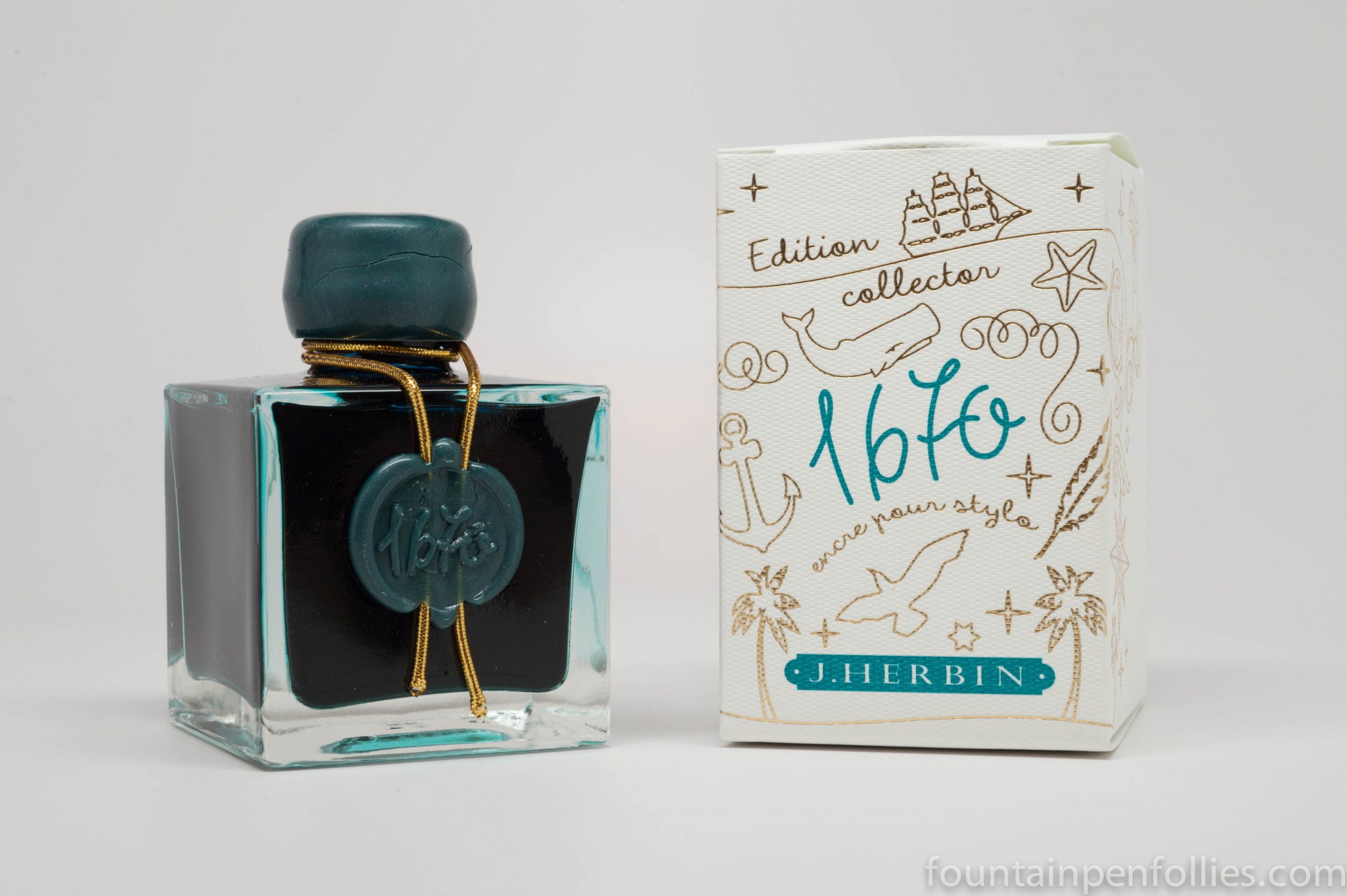
I liked this ink so much, I ended up buying a full bottle. But until recently I couldn’t really test how it cleaned up from a pen — I was too happy using it to empty the pen.

On August 24, I filled my Pelikan M600 with Emerald of Chivor. By the night of September 5, it was time to clean out the pen. It had been left filled for 12 days, which is a fairly long time for me. There are a few conventional inks I wouldn’t keep in a pen that long.

(click Page 2 below to continue)

Off-Topic: In the Garden

DSC_2759

In the evening, with the sharp summer sun set, the humblest blooms catch your eye.

At the top are the late summer flowering of an unknown, undistinguished hosta that serves as ground cover in a shady spot in our side yard.

DSC_2768

This is a clump of bloom from Phlox paniculata ‘David’ — a common garden plox in a mildew-resistant variety that is in the last throes of bloom. The foliage is tired this time of year, and the blooms are less full. But like many fleeting things, if you look closely for the moment, it’s beautiful.

DSC_2773

Thinking About Pen Accessories: Blotting Paper

DSC_2590

Blotting paper! I thought the micro-mesh stick was boring. I thought the loupe was dull. But this has to be the most humble accessory ever. Still: so useful!

Blotting paper. It’s off-white, it’s thick, it’s soft, it’s useful. Mine measures four inches tall by nine inches wide, which covers the width of any paper I use.

What do I use it for? Blotting ink, of course: I blot ink at the end of a page, so I can turn over the page more quickly and continue on the other side. I also rest my hand on blotting paper when I write, to keep my writing paper neat.  And I stick a sheet of blotting paper between the pages of my notebook to mark my page; the blotting paper is there, then, to perform blotting and hand-resting duties when I next open the notebook.

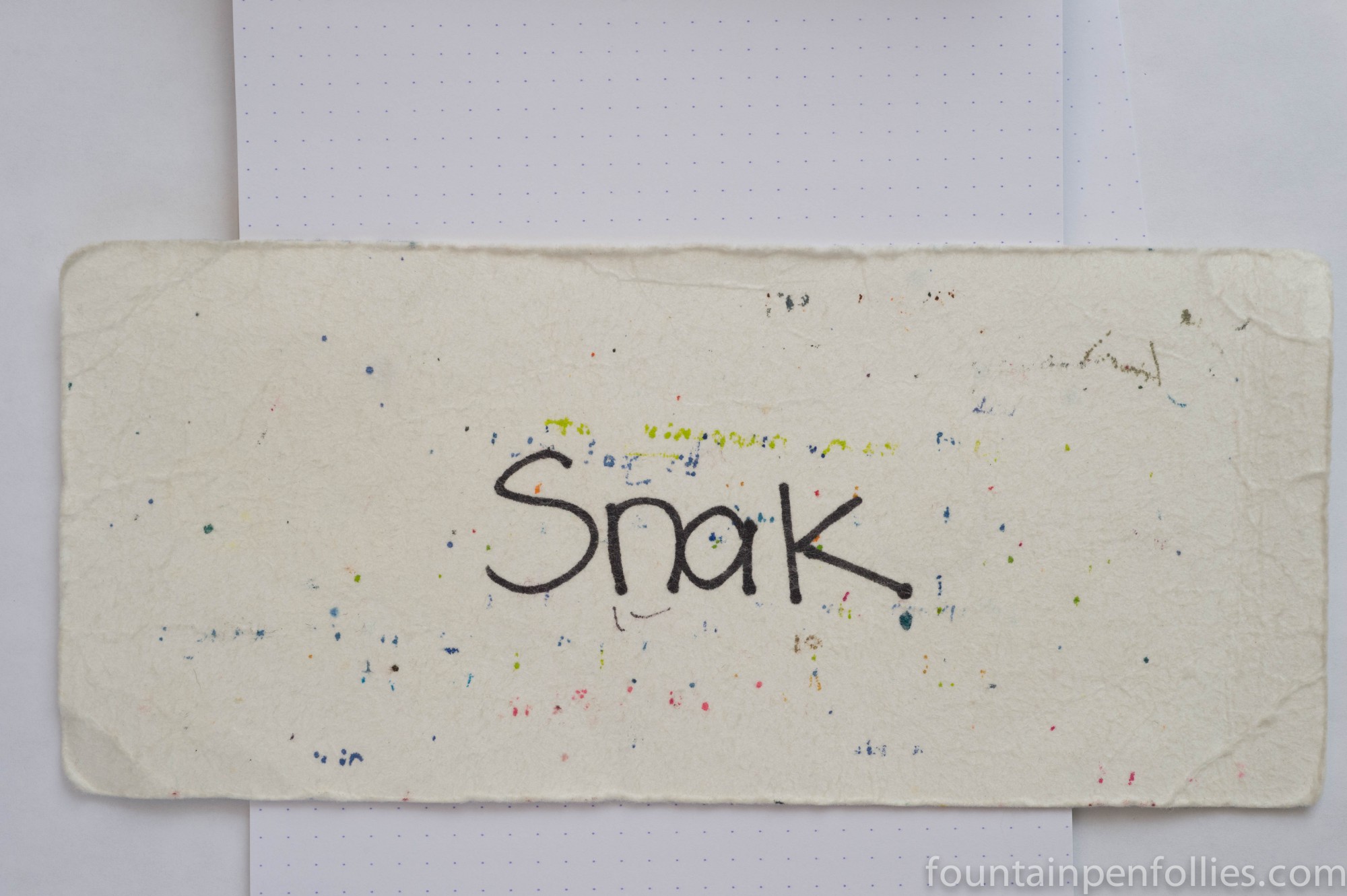
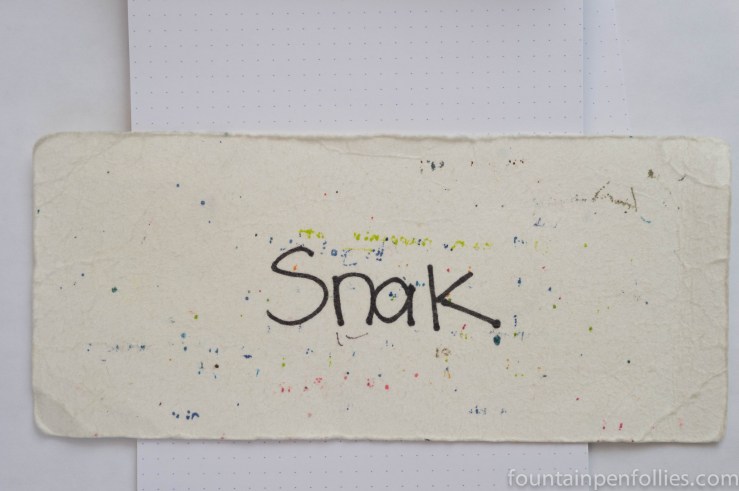
Oh, and one of my pieces of blotting paper also helpfully reminds me to consider having a snack. As you can see, this is multi-purpose stuff.
DSC_2510

On that piece of blotting paper, a very young friend practiced her handwriting and expressed her deepest wishes.  No problem!  It still works fine.  After all, it’s made to blot up ink. And if my little vandal grows up to become another Banksy,  I’ll auction off this piece of juvenilia and make a fortune. Because blotting paper lasts.

I bought my stock from the nice folks at Pendemonium, both at the Chicago Pen Show and through their website. As always, no connection except being a very satisfied customer.

The Joy of Fountain Pens

DSC_2648

I was talking with a fountain pen friend the other day when we discovered that we both, at different times, have gotten into Marie Kondo’s organizational book The Life-Changing Magic of Tidying Up.  We both responded to Kondo’s concept that you should seek to be surrounded only by the objects that bring you joy.

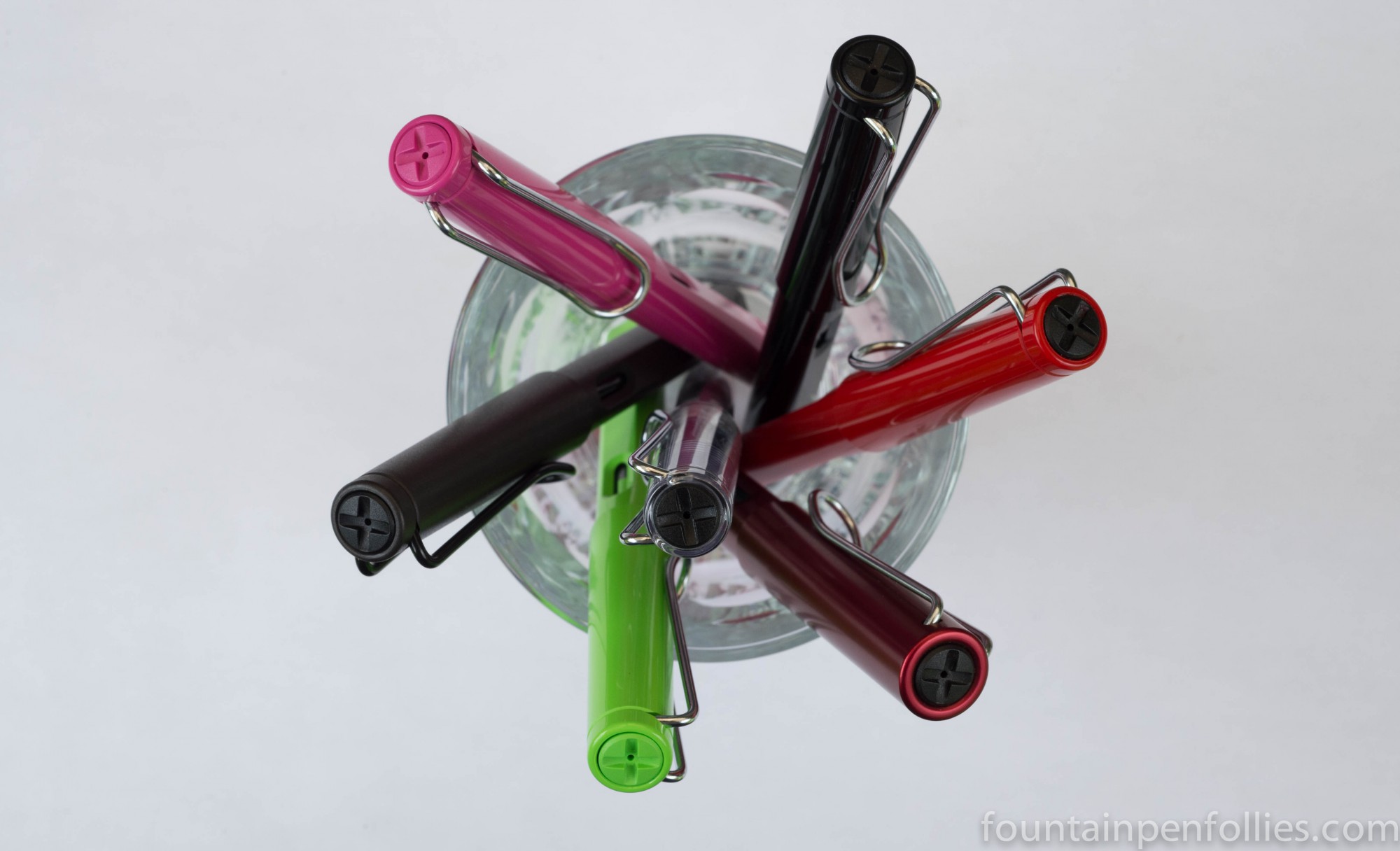
Coincidentally, I had just that morning been staring at a pen cup full of fountain pens, thinking, do I have too many Safaris?  Ha, well, yes, of course.  I had seven Safaris and Al-Stars inked in the pen cup at that moment.  And that is but a fraction of the number I actually own.

But I looked at them with only satisfaction:  pink and reds and apple green and black and charcoal, and a Vista, right there, filled with ink.  And I thought, they make me happy.  So it’s perfect.

(click Page 2 below to continue)

Thinking About Pen Accessories: The Indispensable Loupe

DSC_2408

Be it ever so humble, a loupe is among my most used pen accessories. I use it to examine the condition of pens and nibs I’m thinking of buying, but mostly I use it when I adjust nibs I already own. I am a pen tinkerer, so I use it a lot.

Mine is a 10x loupe made by Eschenbach with an LED light. It’s just great. The optics are excellent, the 10x magnification level is perfect for examining nibs and the integrated light means I can use it in any lighting and get a great view of the nib.

DSC_2416

This loupe is about six inches long, which is small enough to bring to pen shows. The handle makes it easy to hold. It comes with a vinyl cover to protect the lens when not in use. I know it’s sturdy: it has passed the “dropped by Laura” real-life test more than once.

I can’t think of a single thing that isn’t excellent about this loupe. But it was pricey, at a little over $100. You could economize by looking for a less expensive one, though check the quality and the magnification. Unfortunately, the lighted magnifiers that you see everywhere for reading provide only 2x or 3x magnification, which I don’t think is enough for nib work.

But there are a lot of unlighted loupes, and even some magnifying glasses, with 10x magnification.  So if you don’t need the illumination, you also could save money on a loupe purchase by foregoing the light.

Bullet Journal

DSC_2553

I use a planning and organization system called a Bullet Journal.  It is inexpensive, easy and flexible.  It can be as low-key or as high-intensity as you want.

I take a very low-key approach to the Bullet Journal, and that’s what I’ll outline here.  But it’s completely personal, and you could do it differently.  For example, mine is always scrawled in haste, but yours could be carefully written and employ attractive ink colors if that is more motivating.

(click Page 2 below to continue)